ABRA Auto Body Greeley Publishes Guidance on Common Misconceptions About Auto Body Repair
Greeley, CO - November 25, 2026 - PRESSADVANTAGE - ABRA Auto Body Greeley, part of Yoder Collision Network, is
Press Release Disclaimer: This is a press release distributed through the XPR Media network. It has not been independently verified by our newsroom.
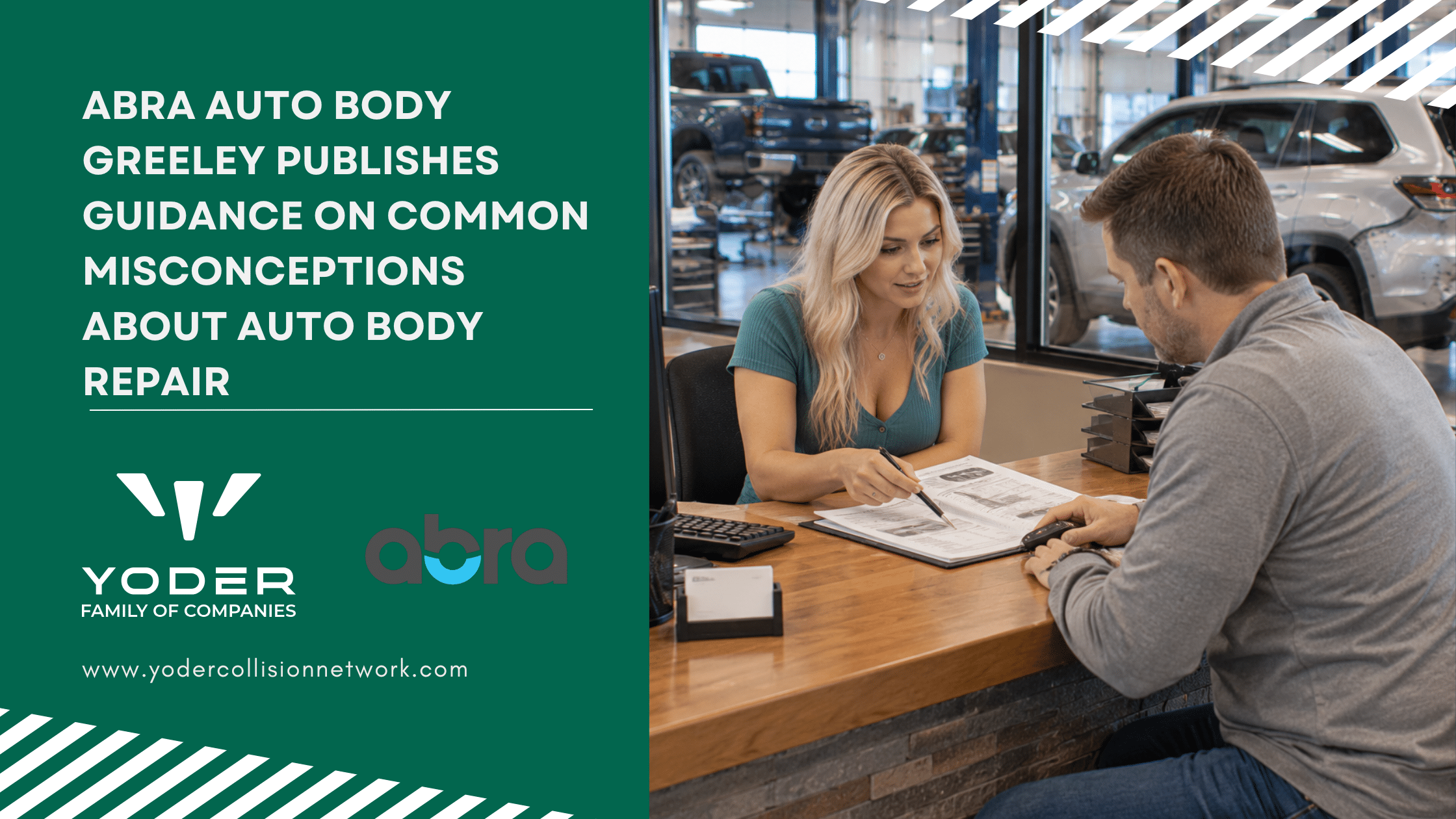

Greeley, CO – November 25, 2026 – PRESSADVANTAGE –
ABRA Auto Body Greeley, part of Yoder Collision Network, is publishing consumer guidance addressing six common misconceptions that can influence decisions following a vehicle accident. The guidance covers hidden damage, preliminary estimates, insurance involvement, replacement parts, repair timelines, and post-repair inspections.
The information explains differences between visible vehicle damage and conditions that may be identified during a professional damage assessment. Repair requirements vary according to the extent of the collision, vehicle construction, manufacturer procedures, and the condition of affected components.
One misconception is that minor exterior damage is always cosmetic. A dented bumper, damaged panel, or small collision mark may conceal damage to mounting brackets, reinforcement components, or nearby equipment. An initial visual inspection may not identify every affected component, particularly when damaged panels remain installed.
A second misconception is that the initial repair estimate represents a guaranteed final cost. Preliminary estimates generally reflect damage identified during the first assessment, while additional conditions may become visible during disassembly. These findings can result in supplemental documentation, revised repair plans, additional parts, and changes to the estimated repair cost.
Information about damage evaluation and restoration procedures is available through Yoder Collision Network’s auto body repair services. The company’s repair information describes the assessment and restoration of accident-related body damage.
A third misconception involves insurance company recommendations. Some vehicle owners believe they are required to use a repair facility recommended by their insurer, although Colorado drivers generally have the right to select their preferred repair shop. Insurance policy provisions, coverage limitations, and individual claim decisions can still affect payment responsibilities and repair arrangements.
Repair facility selection and insurance coverage are separate aspects of the claims process. Differences between an insurer’s initial estimate and a repair facility’s assessment may arise when additional damage or necessary repair operations are identified. Supplemental estimates and supporting documentation are commonly used to communicate these changes.
A fourth misconception is that all replacement parts are interchangeable or that every damaged component must be replaced. Original equipment manufacturer parts, aftermarket components, and recycled original equipment parts may differ in design, condition, availability, and application. The appropriate repair method depends on the affected component, damage severity, material characteristics, and applicable manufacturer instructions.
Some components may be suitable for repair, while others require replacement because of structural or material limitations. Manufacturer repair procedures can establish restrictions involving certain materials, attachment methods, and damage locations. These requirements influence repair planning and parts selection.
A fifth misconception is that minor-looking damage always results in a short repair timeline. Completion dates can be affected by parts availability, additional damage discovered during disassembly, refinishing requirements, insurance review, and inspections required before vehicle delivery. The visible size of the damaged area does not necessarily indicate the number of repair operations involved.
Repair schedules may change when additional parts or procedures become necessary. Documentation of these developments helps explain revisions to the original repair plan and provides a record of changes during the restoration process.
A sixth misconception is that a vehicle is fully repaired once its exterior appearance has been restored. Depending on the collision, repairs may involve inspections of structural areas, mechanical components, corrosion protection, and electronic systems. A completed paint finish does not independently establish that every affected component has been evaluated.
Modern vehicles may contain cameras and radar sensors supporting Advanced Driver Assistance Systems (ADAS). Depending on the vehicle and the repairs performed, manufacturer procedures may require diagnostic scanning, component inspection, or calibration. These operations are determined by the applicable vehicle requirements rather than being necessary after every collision.
Additional information about accident-related damage assessment and restoration procedures is available through Yoder Collision Network’s collision repair services. The information covers the broader repair process and the technical considerations involved in restoring collision-damaged vehicles.
The consumer guidance identifies several areas that can be reviewed before repairs are authorized, including the possibility of concealed damage, preliminary estimate limitations, insurance coordination, parts selection, anticipated repair timelines, and final inspections. These considerations provide a framework for understanding how repair recommendations are developed and why the scope of work may change.
Repair documentation and communication also influence the consumer experience. Written estimates, supplemental repair information, parts decisions, and completion updates help establish a record of the work performed and the factors affecting the repair schedule.
The November guidance summarizes common misunderstandings about professional auto body repair and the factors involved in determining appropriate restoration procedures. It also explains how vehicle-specific requirements, damage findings, and insurance arrangements can influence the repair process.
Information about the facility, available services, and contact details is accessible through ABRA Auto Body Greeley.
About ABRA Auto Body Greeley
ABRA Auto Body Greeley is part of Yoder Collision Network and is located at 2835 S 31st Ave, Greeley, CO 80631. The facility provides collision repair, auto body repair, paintless dent repair, and related vehicle restoration services. Its operations involve damage assessment, repair planning, applicable manufacturer procedures, and communication with vehicle owners throughout the repair process.
###
For more information about ABRA Auto Body Greeley, contact the company here:
ABRA Auto Body Greeley
Micah
970-304-0165
greeley@abraauto.com
2835 S 31st Ave, Greeley, CO 80631