
Playroom Architect Addresses Montessori Toy Rotation as Holiday Toy Spending Climbs
New York, New York - October 05, 2026 - PRESSADVANTAGE - As American families approach a record-setting holiday
Press Release Disclaimer: This is a press release distributed through the XPR Media network. It has not been independently verified by our newsroom.

New York, New York – October 05, 2026 – PRESSADVANTAGE –
As American families approach a record-setting holiday toy-buying season, Playroom Architect has released guidance encouraging parents to separate the toys a child owns from the toys a child sees at any given time.
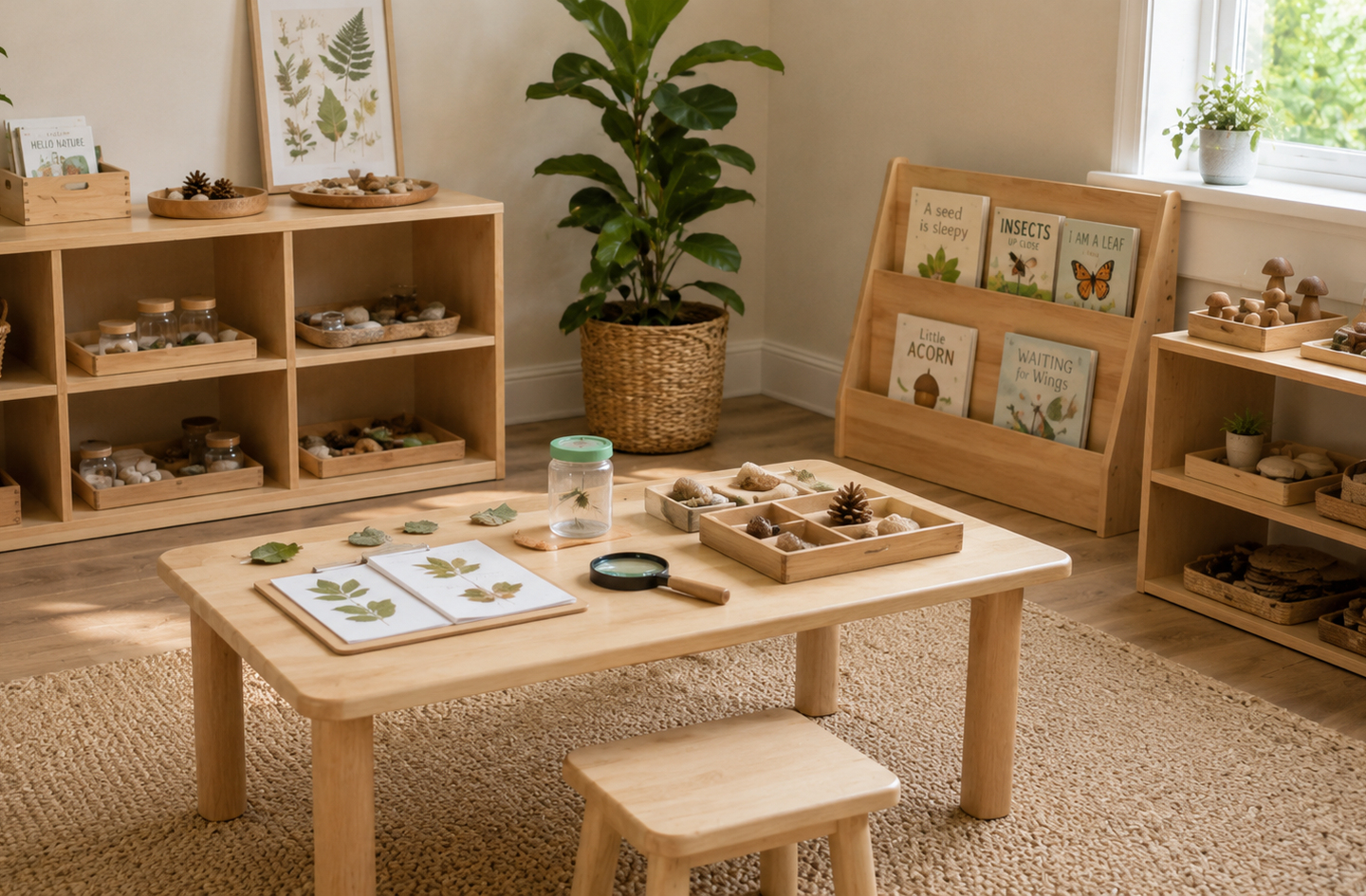
The Playroom Architect Montessori Playroom Setup Guide frames the room as a system rather than a storage challenge, built around limited visible choice, child-height access, defined activity zones and a reset a family can realistically maintain.
The guidance responds to new market data. On September 28, 2026, Adobe forecast that U.S. consumers will spend $275.1 billion online during November and December, up 6.7 percent year over year. Within that total, Adobe expects the toy category alone to generate $9.6 billion in online sales, a 9.6 percent annual increase, with toy discounts peaking near 29 percent. Adobe also projects that holiday shopping will begin earlier, with $95.8 billion in online spending during October and roughly $9.9 billion during the October 6-7 Prime shopping event. Amazon has confirmed those dates and positioned the event as the start of the holiday season. The momentum follows a report from Circana in June showing U.S. toy-industry dollar sales up 13 percent through April 2026.
With more toys entering homes, Playroom Architect points to research suggesting that a larger number of visible toys does not automatically improve how toddlers play. A peer-reviewed study published in Infant Behavior and Development compared 36 toddlers aged 18 to 30 months playing with four toys versus 16. When fewer toys were available, the children played longer with individual items and used them in more varied ways. The company notes this was a small study and treats the finding as directional rather than a universal rule about an ideal toy count.
“The holiday surge does not require placing every new toy on the shelf the moment it arrives,” said Oded Feigin, founder of Playroom Architect. “Inventory and display are two separate design decisions. Families can own a broad collection while deliberately keeping the active play environment small and purposeful.”
The company recommends treating holiday gifts as incoming inventory. New toys arrive, parents observe which items suit the child’s current stage, a manageable group enters the active environment, and other items move to back-stock for later rotation. The Playroom Architect Montessori Toy Shelf Guide details a child-height, open-front unit that displays six to ten activities spaced visibly in a single row, so each item remains within a young child’s reach and sight.
“A workable system gives every toy a home, whether on display or in back-stock,” Feigin added. “When parents design for the reset instead of the reveal, the post-holiday cleanup becomes manageable.”
Rotation itself is tied to behavior rather than a fixed calendar. The Playroom Architect Guide to Montessori Toy Rotation advises parents to use observed disengagement, such as a repeatedly ignored activity, as the signal to rotate an item out and bring another forward.
Playroom Architect is a founder-led educational resource providing engineering-informed guidance for designing safe, developmentally supportive indoor play spaces. Led by Oded Feigin, the company focuses on layout systems, storage logic, structural safety and practical family use, and offers organized topic hubs and product reviews for parents of young children.
###
For more information about Playroom Architect, contact the company here:
Playroom Architect
Oded Feigin
info@playroomarchitect.com
144-42 Jewel Avenue
Flushing, NY 11367
United States


