New method for safer plastics through porous ZIF-67 materials
GA, UNITED STATES, September 22, 2026 /EINPresswire.com/ -- Researchers have developed a strategy to improve the fire
Press Release Disclaimer: This is a press release distributed through the XPR Media network. It has not been independently verified by our newsroom.
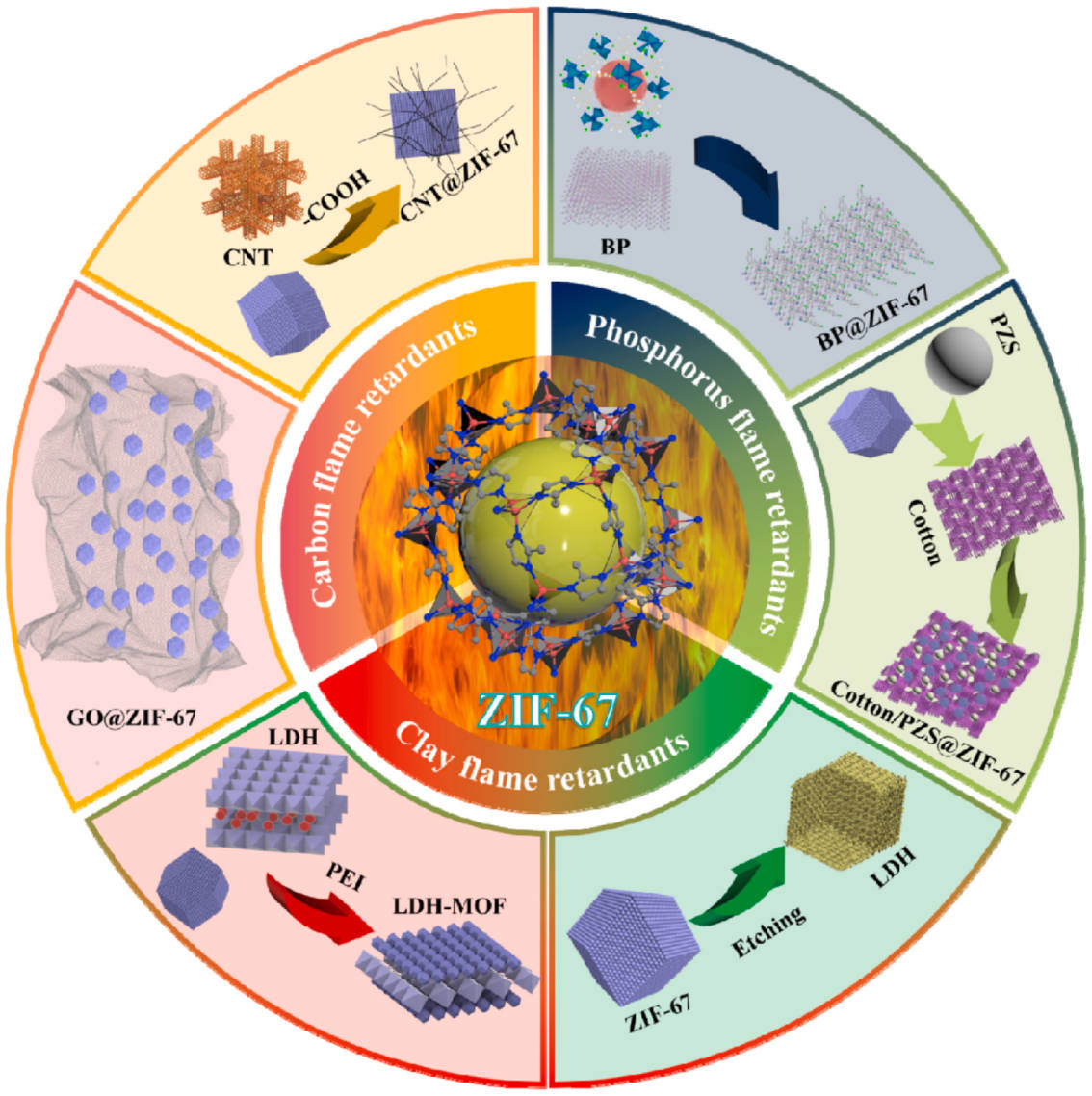

GA, UNITED STATES, September 22, 2026 /EINPresswire.com/ — Researchers have developed a strategy to improve the fire safety of polymer materials by using ZIF-67, a porous metal-organic framework, together with different flame-retardant components. The study explains how ZIF-67 can enhance fire resistance, reduce smoke release and provide a versatile platform for designing safer high-performance polymer composites.
Plastics are widely used in modern life because they are lightweight, durable and easy to process. However, many polymer materials can burn rapidly and release large amounts of heat and smoke during fires. Developing safer polymers without sacrificing their useful properties remains an important challenge.
In a new study published in Advanced Nanocomposites, researchers reviewed and analyzed how ZIF-67, a porous metal-organic framework material, can be combined with different flame-retardant systems to improve polymer fire safety.
“ZIF-67 provides a unique platform because its porous structure, adjustable chemistry and cobalt-based active sites allow it to work together with different flame-retardant components,” explains corresponding author Ye-Tang Pan. “ By combining ZIF-67 with phosphorus-based, clay-based and carbon-based flame retardants, we can create synergistic systems that provide improved protection against heat, flames and smoke.”
The team’s findings underscroed ZIF-67’s value in fire protection. “Its porous structure can help improve the dispersion of flame-retardant components in polymer matrices, while cobalt-containing sites can promote the formation of protective carbon layers during combustion. These effects can slow heat transfer, reduce the release of combustible products and suppress smoke generation,” shares Pan.
The researchers also summarized different preparation strategies, including direct mixing, in-situ growth, etching and conversion into carbon-based derivatives. “These approaches provide opportunities for designing multifunctional polymer materials with improved fire safety and additional functions such as electromagnetic protection and thermal management,” Pan adds.
The researchers noted that future research should focus on scalable preparation methods, understanding structural evolution during combustion and developing intelligent fire-resistant materials for practical applications.
References
DOI
10.1016/j.adna.2026.02.004
Original Source URL
https://doi.org/10.1016/j.adna.2026.02.004
Funding information
This research was supported by the National Natural Science Foundation of China (Grant No. 22375023), Natural Science Foundation of Chongqing (CSTB2024NSCQ-MSX0452), Hebei Natural Science Foundation (E2024105006), Shandong Province Natural Science Foundation (ZR2024ME040), Fundamental Research Funds for the Central Universities (2025CX11006), and Open Research Fund of Guangdong Advanced Carbon Materials Co., Ltd (Kargen-2024B1604).
Lucy Wang
BioDesign Research
email us here
Legal Disclaimer:
EIN Presswire provides this news content “as is” without warranty of any kind. We do not accept any responsibility or liability
for the accuracy, content, images, videos, licenses, completeness, legality, or reliability of the information contained in this
article. If you have any complaints or copyright issues related to this article, kindly contact the author above.

Media gallery